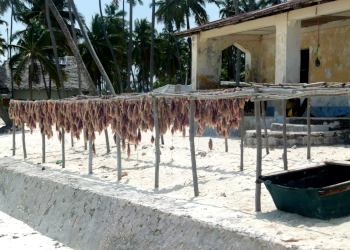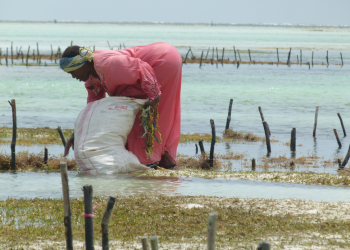
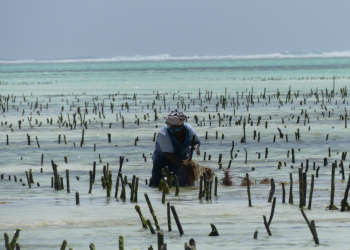
Seaweed farming in Paje, Zanzibar, is a vital coastal tradition that supports many local families. Women are the backbone of the seaweed economy, organizing work, harvesting and selling the crop. Farms stretch across the shallow tidal flats, where ropes and lines are anchored by stakes. Farmers tie young seaweed seedlings to the ropes at low tide and let them grow in the lagoon. Harvests are sun-dried on mats or rocks until they become hard, light and transportable. Dried seaweed is sold to traders who supply processing plants that extract carrageenan used worldwide. Income from seaweed provides a steady supplement to fishing and small-scale agriculture.
Community cooperatives and microfinance projects help farmers access seed, tools and fairer prices. NGOs and government programs also offer training in farming techniques and quality control. Value-added initiatives promote soap, cosmetics and food products made with local seaweed extracts. Sustainable practices like rotating plots and careful seed selection help protect the lagoons. Climate change, tidal shifts, and disease outbreaks remain serious threats to production. Market price volatility and middlemen reduce the profits that reach small-scale farmers. Younger generations sometimes leave for towns, putting traditional knowledge at risk.
Seaweed culture shapes daily rhythms, with work timed to tides and market cycles.
Visitors to Paje can learn about farms on guided walks and community tours.
Seaweed farming fosters social cohesion as women collaborate, share skills and pool resources.
Celebrating seaweed culture also highlights the need for fair trade and environmental safeguards.
Supporting local producers through responsible tourism and purchasing helps sustain livelihoods.
Seaweed in Paje is more than a crop: it is a living tradition linking people, place and sea.
Just near Nakupenda Villa (50m), you can visit the Mwani Center
and meet the makers of these seaweed skincare products.